Understanding Your Bone Density Options in BC: DXA vs. REMS Scans
When it comes to healthy aging, your bone density is one of the most important metrics to track. Detecting osteopenia or osteoporosis early allows you to take preventative measures before a fragility fracture occurs.
For British Columbians, taking charge of bone health often leads to a common question: How should I get my bone density tested?
For decades, there has only been one widely available answer. Today, advancements in medical technology have introduced a new, radiation-free alternative. If you are exploring your bone health options in BC, here is everything you need to know about traditional DXA scans versus the innovative REMS ultrasound technology.
THE TRADITIONAL GOLD STANDARD: DXA SCANS
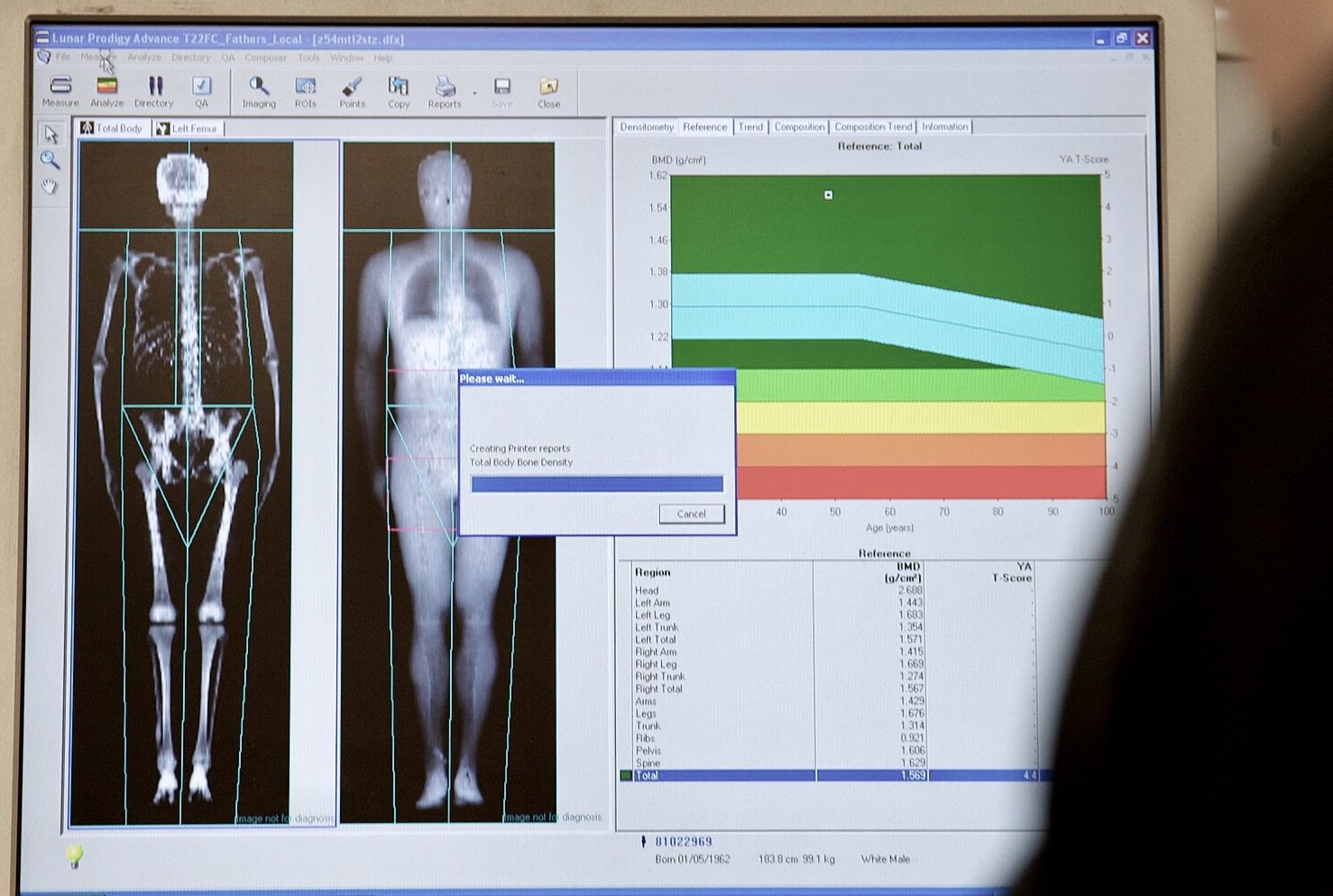
DXA (Dual-energy X-ray Absorptiometry) is the most recognized tool for measuring bone mineral density (BMD). It works by passing low-dose X-ray beams through your lower spine and hip to calculate the mineral content of your bones.
The Pros of DXA:
The Clinical Standard: DXA is universally recognized by healthcare systems and is the primary tool used by physicians to diagnose osteoporosis and prescribe medications.
Highly Researched: It has decades of clinical data backing its efficacy.
The Challenges of DXA in British Columbia:
Wait Times and MSP: While DXA scans are covered by the Medical Services Plan (MSP) for eligible individuals (typically those over 65 or with specific high-risk factors), the public system is heavily backlogged. According to local health advocacy groups, wait times for government-funded bone density tests in BC can stretch up to a year.
Doctor Referrals Required: You cannot simply book a DXA scan through the public system; you must first secure a doctor’s referral, which can be an additional hurdle for the many British Columbians currently without a family physician.
Radiation Exposure: While the radiation dose is very low, it still relies on ionizing radiation. Because of this, it is not recommended for pregnant women and limits how frequently you can safely monitor your bone health.
Vulnerability to Artifacts: Clinical studies show that DXA can sometimes be "fooled" by artifacts like severe arthritis, bone spurs, or vascular calcifications, which can artificially inflate your bone density score and mask underlying osteoporosis.
THE MODERN ALTERNATIVE: REMS TECHNOLOGY
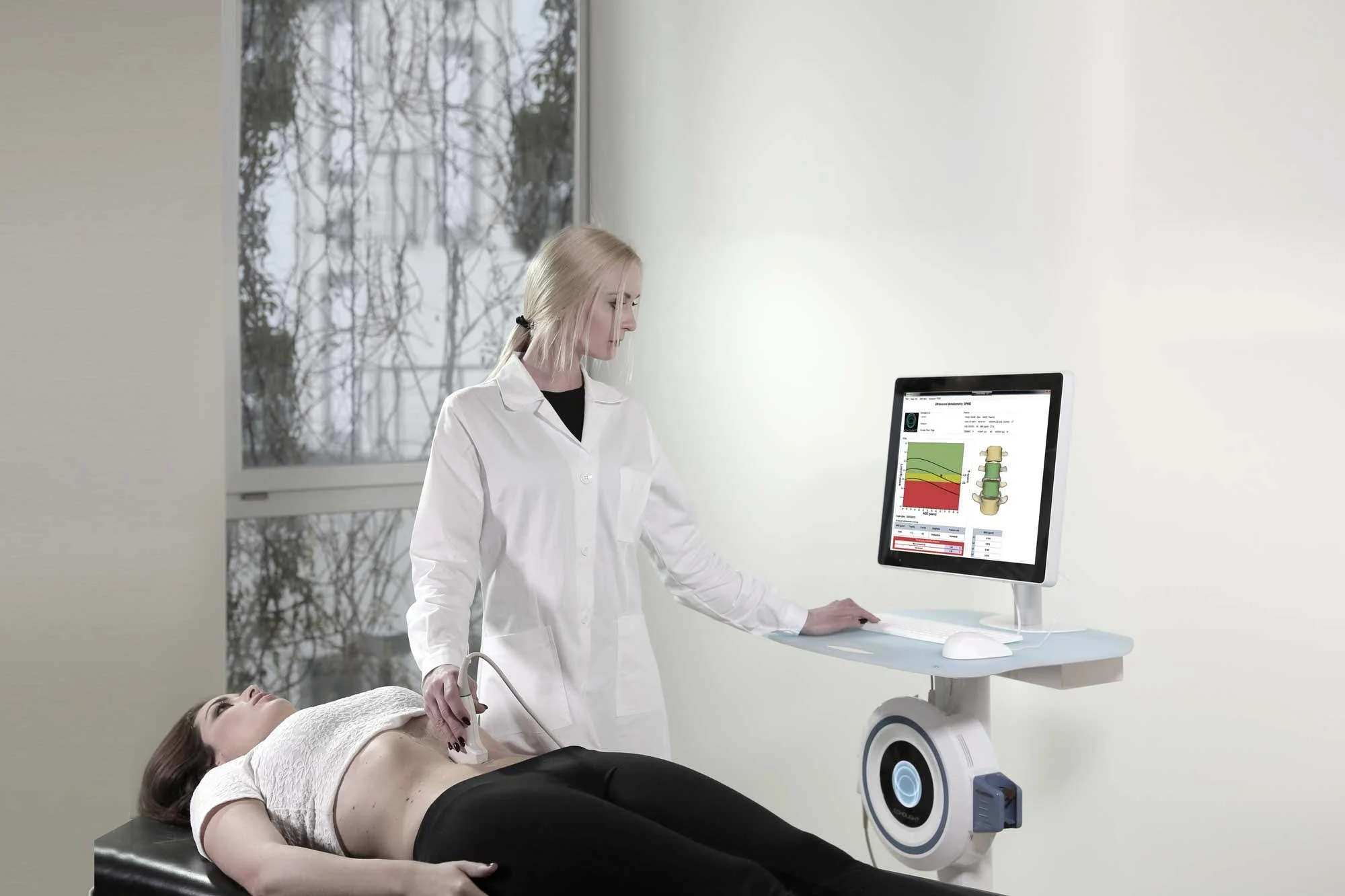
Radiofrequency Echographic Multi Spectrometry (REMS) is an innovative, Health Canada-approved technology that uses advanced ultrasound rather than X-rays to assess bone health. During a REMS scan, a small probe is placed on the abdomen and hip. The system analyzes the raw radiofrequency signals that bounce back to determine bone density and strength.
The Pros of REMS:
Zero Radiation: Because REMS uses ultrasound, it is 100% radiation-free. This makes it completely safe for pregnant women, younger individuals looking to establish a baseline, and patients who want to monitor their bone health frequently (e.g., every 6 months to see if a new diet or exercise routine is working).
Measures Bone Quality, Not Just Density: REMS doesn't just look at the mineral mass; it analyzes the microarchitecture of the bone to generate a "Fragility Score," providing a highly accurate 5-year fracture risk assessment.
Filters Out Artifacts: Unlike DXA, REMS software is capable of distinguishing between actual bone and artifacts like arthritis calcifications, often providing a clearer picture of your true bone health.
No Waitlists, No Referrals: In British Columbia, REMS technology is available through private preventative healthcare clinics. Because it operates on a private-pay model, you do not need a doctor's referral to book an appointment, and you can secure a scan within days, not months. You get your comprehensive report immediately and can share it with your healthcare team.
The Considerations of REMS:
Out-of-Pocket Cost: Because REMS is offered through private clinics, it is not covered by BC's MSP. Patients must pay out-of-pocket or check their private extended health benefits for coverage.
WHICH SCAN IS RIGHT FOR YOU?
DXA and REMS are both powerful, accurate tools for assessing bone health.
If you are over 65, have a doctor's referral, and don't mind the wait, a publicly funded DXA scan is an excellent choice. However, if you want immediate answers, lack a family doctor, wish to avoid radiation, or want a deeper look at your bone quality, REMS is a highly effective, accessible alternative.
BoneHealth BC uses state-of-the-art Echolight REMS technology to give our patients immediate, actionable insights into their bone health.
Don't wait a year to understand your fracture risk. Take control of your future.

Dr. Todd Levins, ND
Todd's dedication to bone health stems from his belief that evidence-based knowledge can counteract the prevailing climate of fear and frailty surrounding osteoporosis. His goal is to empower individuals to maintain freedom of movement and physical confidence throughout every stage of life.
Dr Levins completed a BSc in Biology at the University of Victoria and went on to complete his Doctor of Naturopathic Medicine at the Canadian College of Naturopathic Medicine in Toronto.
Dr. Levins is one of BoneHealth BC’s two NDs offering Naturopathic Medical Review of REMS scans, helping our patients understand the initial bone health management protocols based on your BMD, T-SCORE, Z-SCORE, and FRAGILITY SCORE.
